




OUR STORY
The foundation maintains and protects a significant agroforestry area in Taggat Sur, featuring 2,240 mature trees with a remarkable history. The Mahogany trees, though not native to the local ecosystem, represent a successful introduction to the area. These trees were planted in two phases – in 1998 and 2003, using seeds and seedlings sourced from the University of the Philippines Los Baños and local farmers in Calauan, Laguna. The majestic Tanguile trees, planted in 1985 by Primitivo Calumpit Sr., originated from the nursery of Taggat Industries Incorporated. It is our honor to now care for these fully grown hardwood trees, ensuring their sustainability for future generations. The forest also includes other valuable hardwoods like Binuang and Narra, alongside productive species such as Coconut, Santol, Cacao and Calamansi supporting our sustainable agroforestry initiatives.
Significant infrastructure development has enhanced the area’s functionality and accessibility. We have installed three water barriers and a 1.2-kilometer water line, ensuring efficient water management throughout the property. A fishpond has been established to support aquaculture activities, while two well-maintained mountain trails (short and long) and a view deck have been constructed to improve site access and monitoring capabilities. Two accommodation houses on the property serve students, researchers, travelers, and visitors working in the area, providing additional income for area maintenance while supporting educational and research activities.
Our maintenance program includes regular tree monitoring, trail maintenance, water system management, and area protection measures. These activities ensure both forest preservation and infrastructure sustainability. The project successfully combines environmental conservation with practical resource management, supporting biodiversity while providing opportunities for sustainable development.
Future plans focus on enhancing our agroforestry practices, maintaining existing infrastructure, and exploring eco-tourism potential. This project demonstrates our commitment to environmental stewardship while developing sustainable community resources. Through continued dedication to this project, we ensure that this valuable forest area, with its rich history and diverse species, will thrive for future generations while supporting local biodiversity and livelihood programs.
Activity
Regular Forest Care
-Pruning and trimming, Trail clearing and maintenance, Tree health monitoring, Boundary maintenance, Area patrolling
Conservation Work
-Tree inventory updates, Species documentation, Growth monitoring, Anti-illegal logging watch, Adjacent area protection
Soil Management
-Erosion control measures, Composting activities, Natural fertilization, Fertility monitoring, Soil protection
Harvest Operations
-Fruit tree management, Calamansi harvesting, Coconut gathering, Vegetable gardening, Supervised replanting
Area Protection
-Regular patrols, Fire prevention, Fence maintenance, Signage upkeep, Access control
Community Engagement
-Local employment, Knowledge sharing, Educational activities, Training programs, Community participation
Volunteers
Renel Ramos
Rosela Ramos
Joseph Deo Failogna
Albert Calumpit
Ralph Suarez
Sadiri Calumpit
Christopher Alciso
Recipients
Green Heart Foundation
Volunteers
Funds and Resources
Php 932,000.00
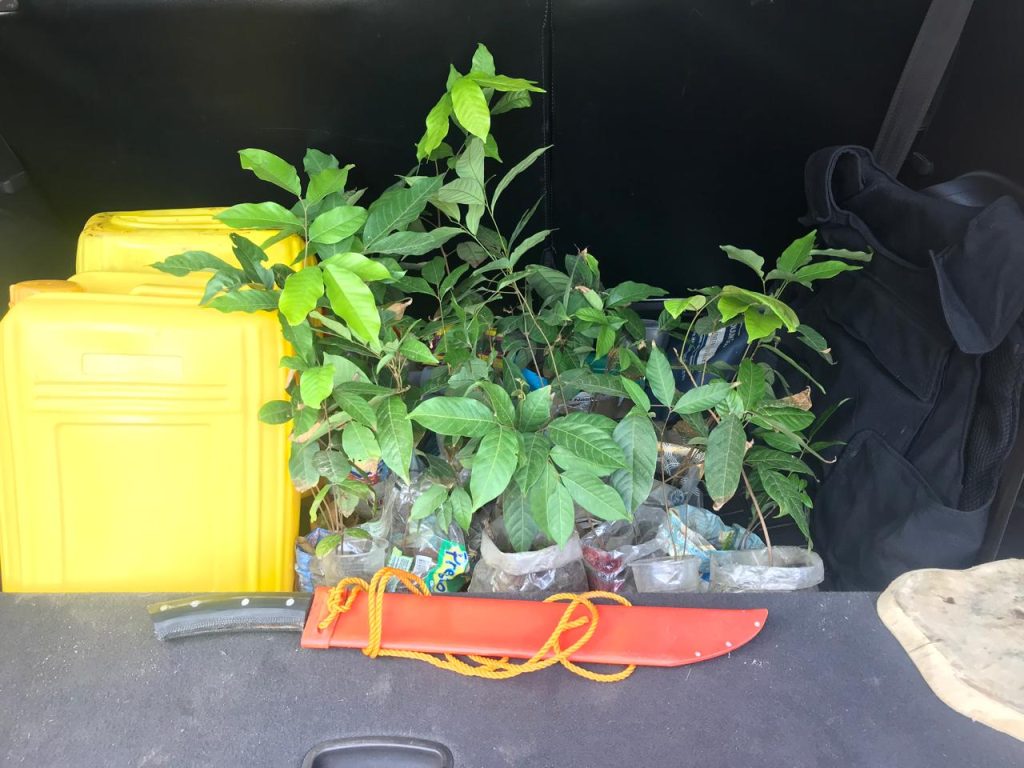
Cacao Seedlings
Tilapia Fingerlings
Peking Duck
Recognition
Angeles Calumpit Ramos
Capt. RC Ramos
Dr. RS Ramos
For Funding & Nesessary Support
What went well
The foundation achieved significant success in maintaining the agroforestry area through several implemented strategies. An effective periodic maintenance schedule is established, ensuring regular pruning, clearing, and overall care of the various tree species. A comprehensive tree inventory system has been developed, accurately tracking the growth of valuable trees in the area. Water sustainability has been successfully addressed through the development of natural water sources and fishponds, ensuring year-round water availability for both the forest and agricultural components. The continuous support from committed donors has been instrumental in sustaining these maintenance activities, allowing for consistent care of the property including its mountain trails and ecological features. This stable funding has enabled the foundation to maintain regular local employment for maintenance work, contributing to both environmental conservation and community development
What went wrong
The current water system, which relies on plastic hoses bringing water from neighboring mountains, has proven vulnerable to damage and disruption. The wooden nursery structures have not withstood strong typhoons, requiring frequent repairs and reconstruction. Additionally, the foundation has faced difficulties in successfully growing cacao seedlings, indicating a need for specialized training and expertise in cacao cultivation. These challenges highlight the importance of developing more resilient infrastructure and building technical capacity, particularly in specialized crop management. The foundation recognizes these areas for improvement and is working towards more durable solutions for water systems, stronger nursery structures, and enhanced agricultural training programs.
What we learned
Our agroforestry project has taught us valuable lessons, particularly during typhoon seasons that frequently test our resilience. We learned that permanent solutions are better than temporary fixes – especially for water systems and nursery structures that often need rebuilding after strong storms. Growing specialized crops like cacao requires proper training and expertise, with additional challenges of protecting them during severe weather. Our systematic approach to maintenance and inventory works well, but our infrastructure needs to be more typhoon-resistant, as we regularly face the task of rebuilding and replenishing damaged facilities and supplies after each major weather disturbance.
Most importantly, we’ve seen how community involvement and steady donor support are essential for success, especially in the critical periods of post-typhoon recovery and reconstruction. The seasonal cycle of damage and renewal has taught us to build stronger, to maintain larger emergency supplies, and to always have a reconstruction plan ready. These insights, shaped by our experiences with nature’s challenges, are helping us build a more resilient and sustainable project that can better withstand the region’s harsh typhoon season.
What we will improve next time
Our next improvements will focus on:
Better Infrastructure
Permanent water systems
Stronger nursery buildings
Better drainage
Knowledge Building
Expert training for cacao farming
Better growing techniques
Local worker skills development
Protection
Weather-resistant structures
Stable water sources
Stronger partnerships
These changes will help our project last longer and work better.